During the 15th European Conference on Ecological Restoration (SERE2026), held in Brest, France, last August, TEAM#UP project partners took part in two sessions focused on education, training and the role of digital learning resources in building the skills needed for ecological restoration. Through these sessions, TEAM#UP highlighted the importance of connecting scientific knowledge, expert networks and innovative educational approaches to make ecological restoration training more accessible and relevant to different audiences.
Developing the next step in accessible ecological restoration training
In the morning, our colleague Ismael García from University of Alicante took the stage during the Education and Training session to present the next big step towards more accessible ecological training. Ismael provided an in-depth look at the high-quality MOOCs we are developing through the TEAM#UP project: courses designed to empower vocational educators and practitioners with the green skills needed to tackle land degradation and support dryland restoration.
His presentation, “An Innovative Methodology for Creating a Global MOOC on Dryland Restoration Using Artificial Intelligence and Expert Networks,” explored the process behind the development of these specialised courses. Based on the ADDIE learning model, the methodology combines a systematic consultation of experts, scientific literature and AI-supported content development using NotebookLM.
The resulting course comprises six modules, 20 chapters and 79 lessons, amounting to 23 hours of learning. It includes interactive learning materials such as knowledge checks, podcasts, dialogues and videos, alongside assessment quizzes.
An important part of the process has been ensuring the global relevance of the content. Specialists from the University of Alicante helped validate the course structure, while an international network of experts contributed case studies and perspectives from different continents, helping move beyond a predominantly Mediterranean perspective.
What's coming soon? These comprehensive courses will soon be available globally on both the Digital Ecological Restoration Toolbox (DERTO) and the SER Learn website, making specialised knowledge in ecological restoration more accessible than ever.
Showcasing digital educational tools for skills development in ecological restoration
In the afternoon, TEAM#UP co-organized and chaired the session “Digital Educational Tools for Skills Development in Ecological Restoration,” together with the SER-Europe Working Group on Education and Training.
The session brought together several initiatives developing digital, open-access educational and training resources in ecological restoration, available at global, regional and European scales. These resources address the learning needs of different audiences, from emerging professionals and university students to vocational education and training (VET) providers, teachers, students and practitioners already working in the field.
The session featured six contributions showcasing different approaches to making ecological restoration knowledge and training more accessible:
- Robin Chazdon from the University of the Sunshine Coast introduced us to the Professional Platform for Education and Learning (PROPEL), a platform under development as part of the UN Decade on Ecosystem Restoration (2021–2030). It will bring together existing educational resources and capacity-development opportunities in ecosystem restoration, connecting learners, educators and organisations around the world.
- Andrea Romero from FAO introduced us to FAO's e-learning portfolio, showcasing a collection of free online courses covering different aspects of ecosystem restoration, from restoration principles and monitoring to agroforestry and financing.
- Karen Sudmeier from the UNCCD G20 Global Land Iniative introduced us to the Trigger Change! initiative, presenting two open-source university-level courses on sustainable agriculture and urban land restoration, as well as a forthcoming MOOC on career and entrepreneurship opportunities in land restoration.
- Elise Mackie from the Society for Ecological Restoration (SER) introduced us to Foundations of Restoration Ecology, a flexible, fully online course offering students, practitioners and professionals around the world access to scientific knowledge and evidence-based restoration practices.
- Fátima D. Gigante from SER-Europe introduced us to the Digital Ecological Restoration Toolbox (DERTO), presenting the open educational resources developed by TEAM#UP to support VET providers, higher education institutions and lifelong learners in developing ecological restoration skills.
- Sebastian Birk of the University of Duisburg-Essen introduced us to the MERLIN Academy, a free online learning platform offering practical and scientific resources to build skills in freshwater restoration and Nature-based Solutions.
The session was recorded and is available here for anyone interested in exploring the presentations and learning more about the initiatives showcased.
Together, these contributions showcased the growing range of digital learning opportunities supporting ecological restoration, from university-level courses and global knowledge platforms to specialised training for vocational education and practitioners. They also highlighted the importance of connecting education with practical experience and ensuring that people across different sectors and career stages can access the knowledge and skills needed to contribute to restoration efforts.
For TEAM#UP, the session was also an opportunity to exchange experiences, connect with other initiatives and highlight the role of DERTO in supporting the development of the skills needed to scale up ecological restoration across Europe and beyond.
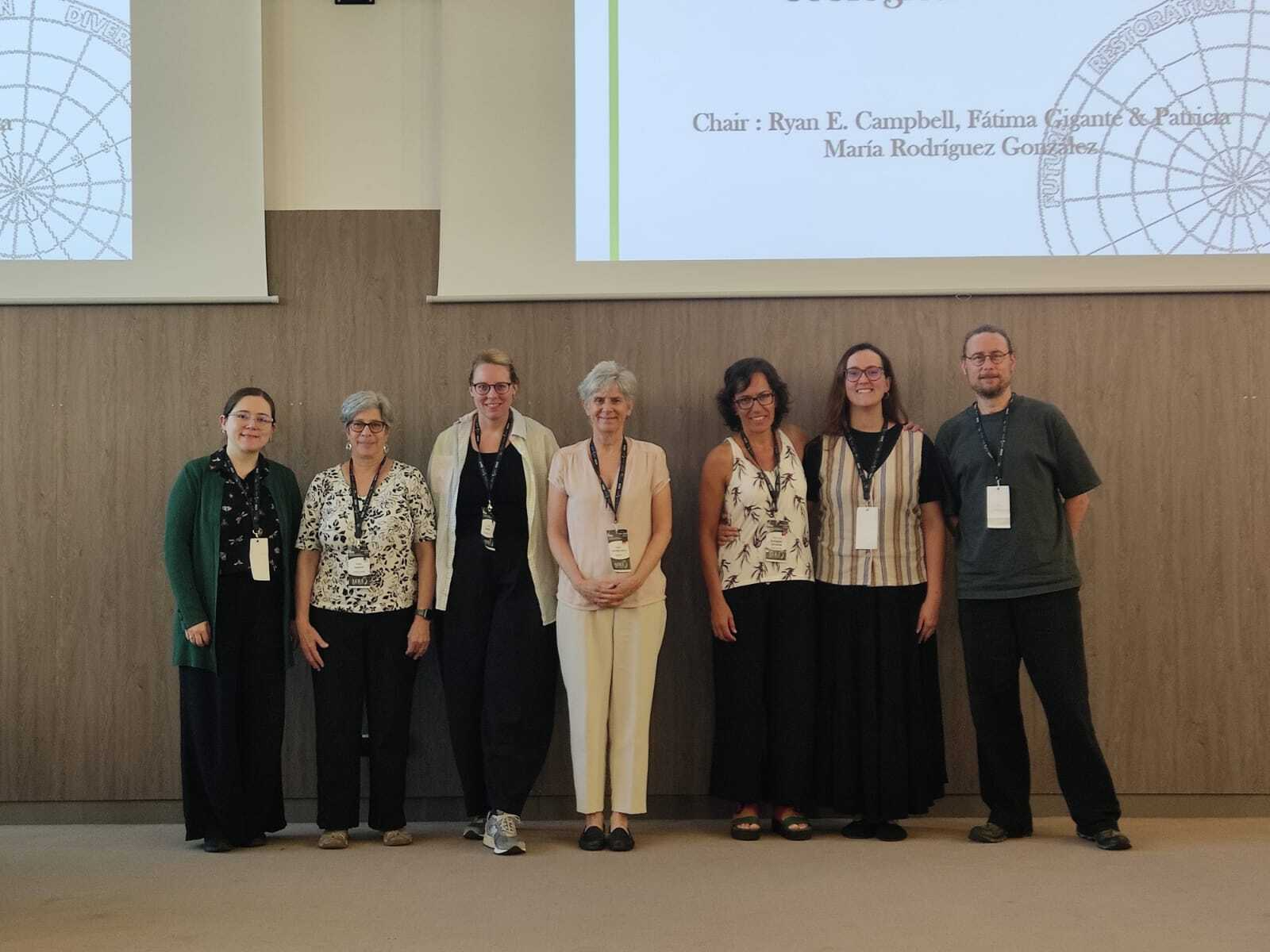
Speakers at the session from left to right: Andrea Romero Montoya, FAO Forestry; Robin Chazdon, University of the Sunshine Coast; Elise Mackie, Society for Ecological Restoration; Dr. Karen Sudmeier, United Nations Convention to Combat Desertification; María Rodíquez González (Session Co-Chair); Fátima D. Gigante, SER-Europe; Sebastian Birk, University of Duisburg-Essen.
Connecting education, skills and ecological restoration
TEAM#UP's participation in SERE2026 reinforced the importance of bridging the gap between scientific research, education and practical restoration work. Whether through developing specialised online courses or connecting existing educational resources, digital learning offers opportunities to make knowledge more accessible and equip a wider range of people with the skills needed to restore ecosystems.
By bringing together expert networks, educational initiatives and vocational training, TEAM#UP continues working towards a future in which ecological restoration knowledge can reach those who need it and translate into meaningful action on the ground.