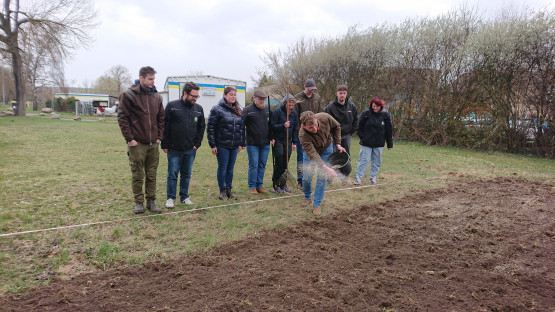
In late March 2026, 14 students from the Haldensleben VET School carried out the first of two annual seedings as part of the Erasmus+ project TEAM#UP. The group is in its second year of full-time training to become “State-Certified Agricultural Business Managers” and has already successfully completed the first year of training, earning the qualification “State-Certified Agricultural Economist.”
Second round of ecological restoration course
The students were prepared through the TEAM#UP introductory course on restoration, which began in September 2025 in English and provided them with fundamental knowledge of ecology and restoration—combined with the question of how they, as future agricultural business managers, can integrate ecologically sustainable practices into their farms.
This was followed by the advanced course, which began in March 2026, runs through July 2026, is conducted in German, and is integrated into the “Alternative Income Sources” course. It translates theoretical knowledge into practice. The current cycle of the basic and advanced courses is already the second. Each the basic and the advanced course take 30 teaching hours.
Demonstration site in general
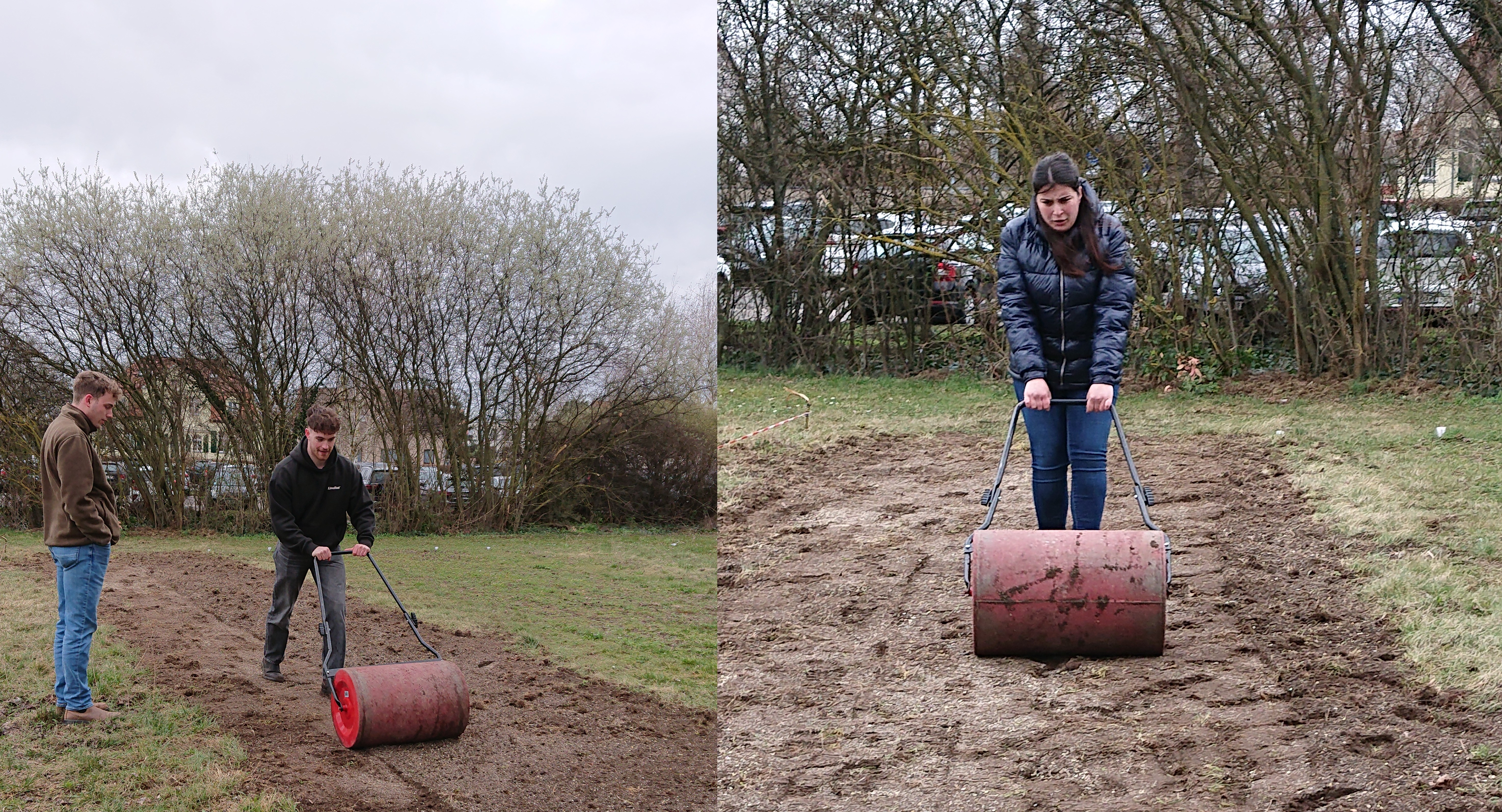
The experimental design calls for both fall and spring sowing in order to compare the two planting times. Therefore, the students sowed wild seeds in the fall of 2025 and repeated the sowing in the spring of 2026. The experimental area is divided into strip-shaped plots, each measuring 3 × 10 meters. It is located near downtown Haldensleben, and the demonstration site was provided by the city as part of a partnership, and is easily accessible on foot from the school. Beyond educational purposes, the area is also intended to serve the public in the long term: informational signs will provide residents with insights into sustainable agriculture and promote awareness of ecological practices.
Measures in detail
On March 10, 2026, the students prepared the demonstration plot—they removed weeds and debris and tilled the soil. They were assisted by a teacher from the VET school Haldensleben and an expert from Anhalt University of Applied Sciences.
On March 25, 2026, they worked the area again and sowed a wildflower seed mixture consisting of 25 different wildflower and grass species.
Challenges
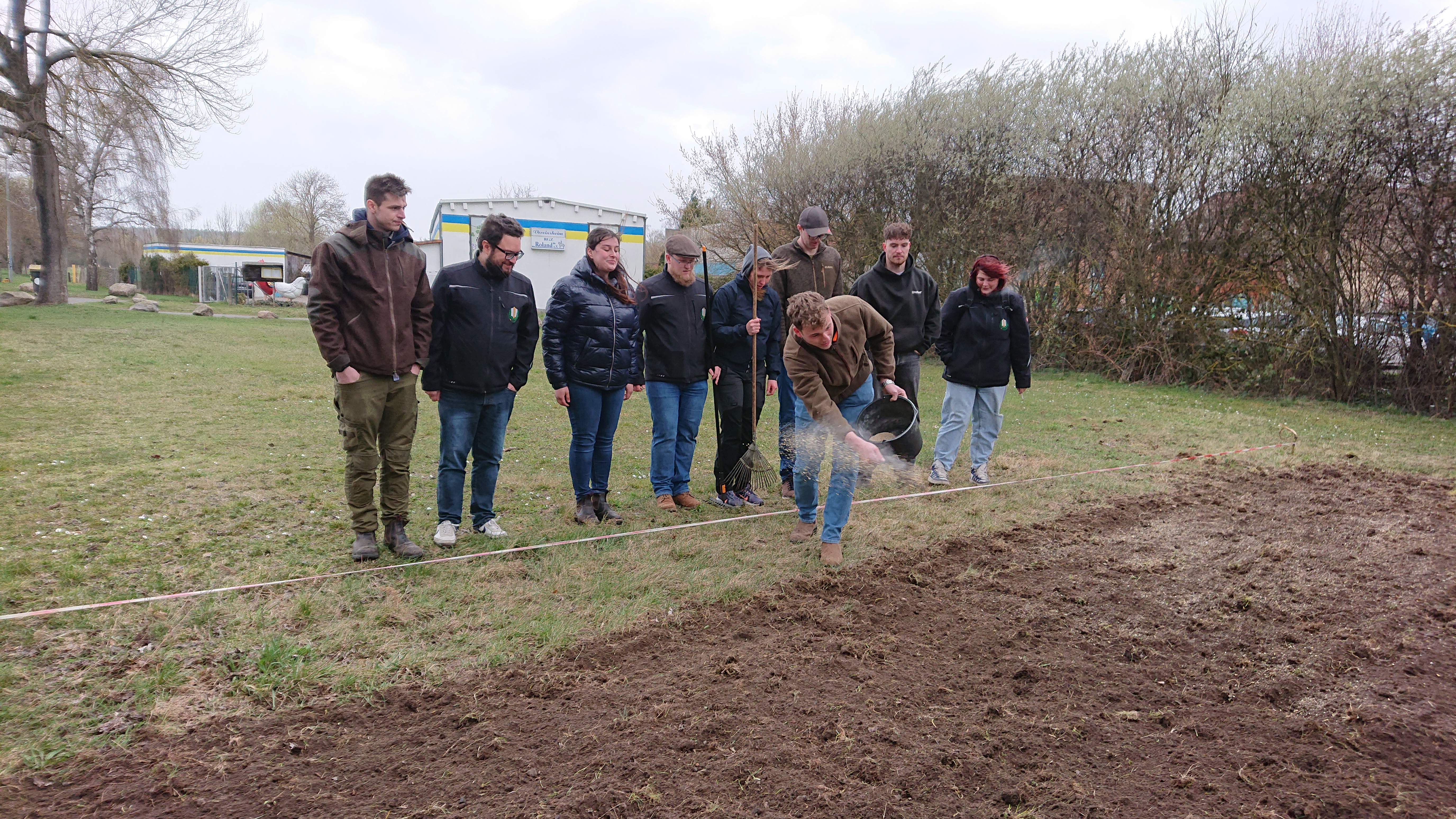
The sowing process on March 25, 2026 was not without its challenges: Strong winds forced both the 14 students and one VET teacher plus an expert from Hochschule Anhalt to improvise. Without hesitation, the students formed a human windbreak, and the seeds were scattered close to the ground in the direction of the wind to ensure even distribution despite the adverse conditions. To guide the process, ground corn had been mixed into the seed mixture beforehand, making the flow of seeds visible. Since Haldensleben is often affected by dry spells in early summer, it was particularly important to ensure good soil contact—which is why the area was rolled after sowing.
The goal is for students to learn to evaluate ecologically sound practices and to apply them independently in the future as farm managers. In the long term, students and teachers will visit the demonstration plot regularly to observe and assess the germination and growth of the various wildflower species.